
Inside

Digital Imaging & OCT Scans
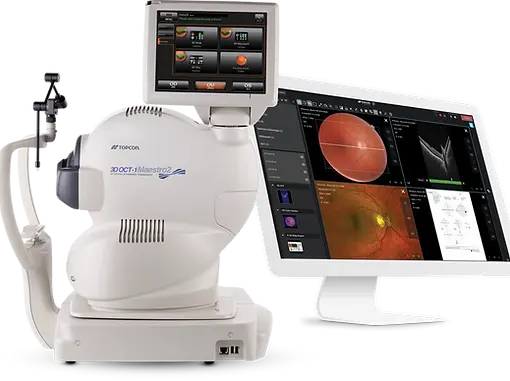
Our optometrists use digital imaging technology to assess the health of your eyes. Utilizing cutting edge technology we are diagnosing and managing ocular diseases like glaucoma, macular degeneration and diabetic retinopathy.
Your retinal images will be stored electronically giving the eye doctor a permanent record of the condition and state of your retina. Earlier and more precise diagnosis means earlier treatment and better visual outcomes.

Early Diagnosis Is Key
Optical Coherence Tomography
Commonly referred to as an OCT scan, optical coherence tomography is the latest advancement in ocular imaging. Similar to ultrasound, this diagnostic technique employs light rather than sound waves to achieve higher resolution pictures of the structural layers of the back of the eye.
OCT is a non-invasive scan that is essential for early diagnosis of glaucoma, macular degeneration and diabetic retinal disease. Early detection of eye disease allows for prevention and treatment strategies to be promptly undertaken to preserve vision.


What is a retina?
The retina is a multi-layered sensory tissue that lines the back of the eye and connects visual images to the brain via the optic nerve.
The macula is responsible for your central vision, allowing you to read or recognize another person. Any type of disruption results in vision loss or distorted vision.
Common Retinal Conditions

Diabetic retinopathy is a condition where blood vessels in the back of the eye become more numerous, swell, leak fluid, and sometimes bleed due to diabetes complications. In others, abnormal new blood vessels grow on the surface of the retina resulting in severe vision loss.
The longer someone has diabetes, the greater their risk of developing diabetic retinopathy. Regular eye exams reduce the risk of developing more severe complications from the disease.
Diabetic eye disease and associated vision loss is preventable when detected early!


